Investigating Software Alliances That Drive Jackpot Expansion Across Touchscreen Casino Networks
Riley Peters · Jun 3, 2026

Investigating Software Alliances That Drive Jackpot Expansion Across Touchscreen Casino Networks
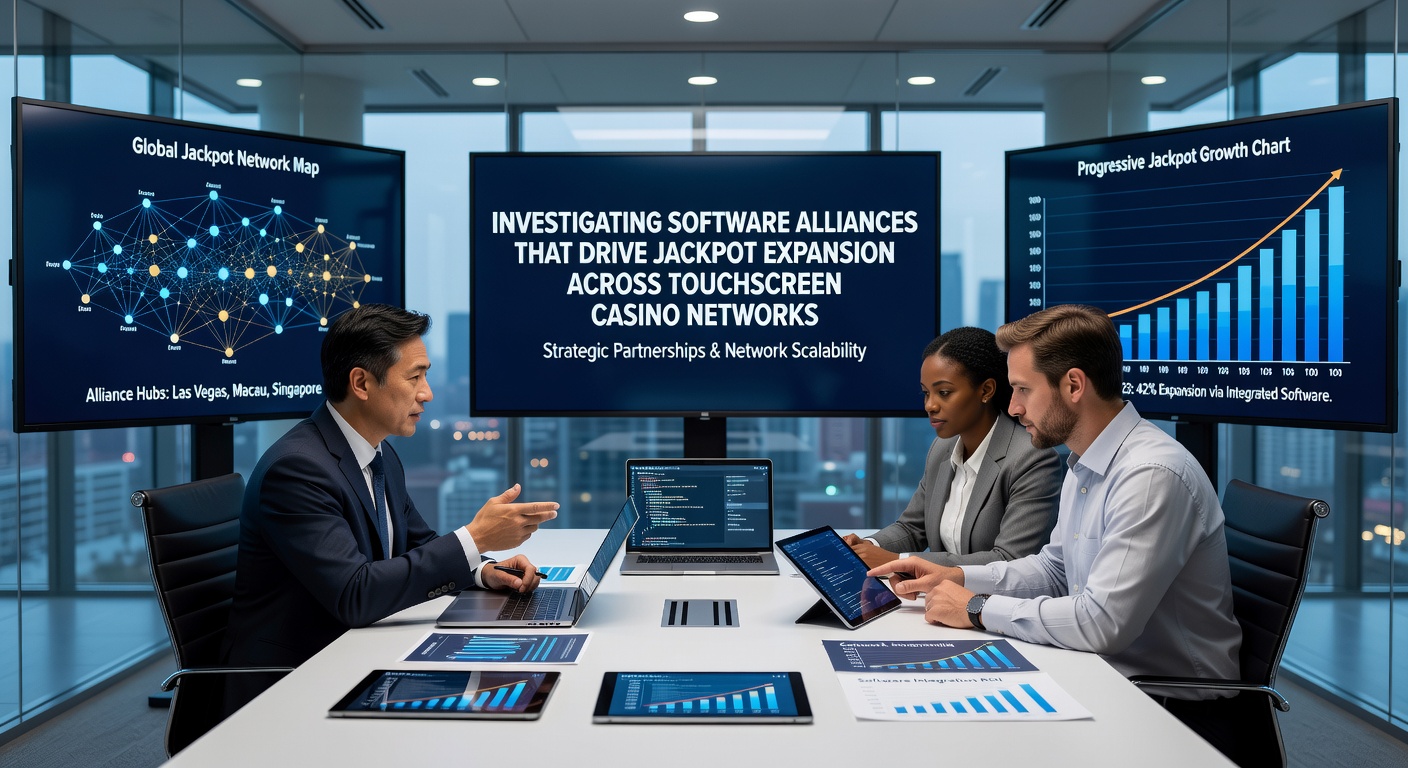
Software alliances between slot manufacturers and network operators have reshaped how progressive jackpots accumulate and distribute across touchscreen terminals in casinos, and these partnerships connect machines from multiple venues into shared prize pools that grow faster than standalone systems. Data from industry tracking services show that linked progressives now account for a growing share of total jackpot payouts in regulated markets, with touchscreen hardware enabling real-time updates to prize meters across wide geographic areas.
Mechanics Behind Networked Jackpot Growth
Touchscreen casino networks rely on centralized software platforms that link individual terminals through secure data protocols, and each wager on a connected machine contributes a small percentage to one or more progressive levels. When alliances form between providers such as Light & Wonder and regional operators, the resulting systems pool contributions from thousands of devices, which accelerates jackpot growth rates compared with isolated installations. Observers note that these configurations require synchronized random number generators and audited contribution tracking to maintain compliance across jurisdictions.
Recent Partnership Patterns and Geographic Reach
Alliances typically involve a core technology provider supplying the jackpot engine while casino groups supply the terminal footprint, and this division of labor has expanded reach into new state markets since 2024. In June 2026 several multi-state networks reported integration milestones that added hundreds of additional touchscreen units to existing progressive links, and figures from regulatory filings indicate corresponding increases in average prize values. What's interesting is how these expansions often follow legislative updates that authorize wider-area progressives, allowing contributions from venues separated by hundreds of miles.
One documented pattern shows software vendors forming bilateral agreements that grant reciprocal access to each partner's installed base, and such arrangements reduce the capital outlay required for any single company to achieve critical mass. Researchers tracking these deals have recorded at least a dozen active cross-provider linkages operating in North America by mid-2026, with similar structures appearing in select Australian and Canadian markets. The ball's in the operators' court when it comes to choosing which alliances deliver the most stable uptime and regulatory transparency.
Technical Standards Supporting Expansion
Touchscreen terminals participating in these networks run middleware that handles meter synchronization, player tracking integration, and automated tax reporting, and alliance partners usually agree on common data formats to avoid translation delays. Studies of network performance reveal that latency below 200 milliseconds is standard for prize updates, which keeps displayed amounts consistent across all connected screens. Those who've examined the underlying code note that encryption standards have tightened in response to earlier incidents of meter manipulation attempts.
Regulatory bodies such as the Nevada Gaming Control Board require independent testing of all linked systems before deployment, and similar oversight exists through the Alcohol and Gaming Commission of Ontario for Canadian installations. These reviews verify that contribution percentages, seed amounts, and reset values comply with approved parameters, which in turn supports player confidence in the fairness of the expanded jackpots.
Market Data and Operational Outcomes
Industry reports compiled through 2026 indicate that casinos participating in allied progressive networks experience higher average daily handle on linked terminals than on non-progressive counterparts, and this differential persists even after accounting for variations in game theme popularity. Figures released by the American Gaming Association show that progressive payouts from multi-provider networks exceeded $1.2 billion across U.S. commercial casinos in the preceding fiscal year. The reality is that operators weigh these revenue figures against the licensing fees and revenue shares demanded by alliance partners when deciding whether to expand participation.
Maintenance protocols have also evolved under these alliances, with remote diagnostics now standard for identifying terminal faults before they affect jackpot integrity. Data centers operated jointly by partner companies monitor thousands of connections simultaneously, and automated alerts trigger service dispatches when contribution streams drop below expected thresholds. It's noteworthy that downtime events have declined measurably since 2023 as these monitoring tools matured.
Conclusion
Alliances among software developers and casino operators continue to enlarge the scale of touchscreen jackpot networks, and regulatory frameworks in multiple jurisdictions have adapted to accommodate the resulting prize structures. Continued growth depends on sustained technical compatibility, transparent auditing, and legislative support for cross-venue linkages. Market participants monitor these developments closely because the size and frequency of progressive awards directly influence both player engagement metrics and long-term network economics.