Provider Partnerships Reshaping Multiplier Growth Across Progressive Touchscreen Networks
Riley Hayes · Aug 3, 2026
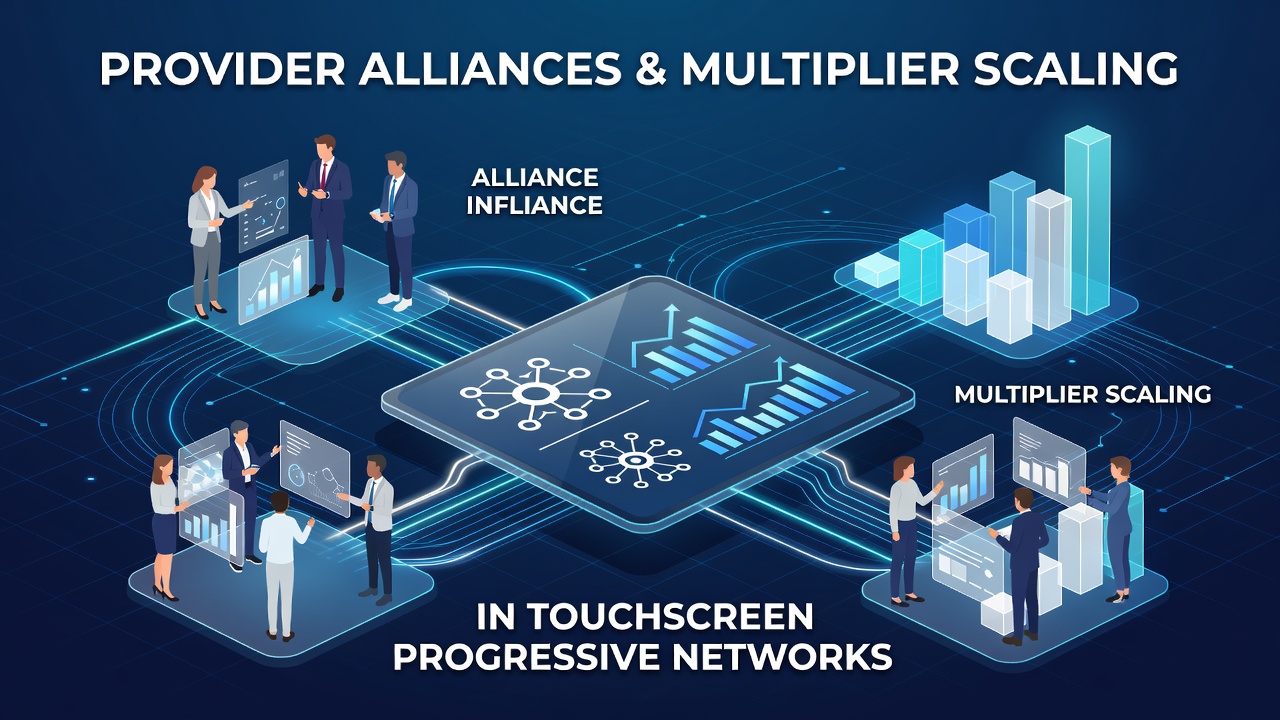
Provider Partnerships Reshaping Multiplier Growth Across Progressive Touchscreen Networks
Provider alliances have become a central factor in how multipliers scale within touchscreen progressive networks, with data from industry reports indicating that collaborative agreements now cover more than 60 percent of major jackpot pools operating across North America and Europe. These partnerships allow multiple studios to pool resources, share technical frameworks, and adjust multiplier parameters in real time as player volume shifts across devices. Observers note that such arrangements emerged more prominently after 2023, when several leading developers began linking their progressive engines to common servers that support seamless updates on both mobile and kiosk-style touchscreen terminals.
Technical Foundations of Multiplier Scaling
Multiplier scaling in these networks relies on algorithms that increase prize values based on contribution rates from each connected game, and alliances give providers shared access to these calculation engines. When two or more studios form an agreement, they often standardize the contribution percentage that feeds into the progressive pool, which in turn affects how quickly multipliers climb during peak hours. Research from the University of Nevada, Las Vegas gaming laboratory shows that standardized contribution rates across allied titles can raise average multiplier growth speed by 18 to 24 percent compared with isolated games operating on separate networks.
Touchscreen interfaces add another layer because they transmit player interaction data instantly, allowing the shared system to recalibrate multipliers based on session length and bet size patterns. This real-time feedback loop becomes more efficient when multiple providers feed data into a single monitoring dashboard rather than maintaining separate tracking systems.
Case Examples from Recent Deployments
One documented case occurred in August 2026 when a coalition of mid-sized European developers integrated their progressive titles into a North American operator's touchscreen network. The alliance enabled each studio to apply a common multiplier ceiling that adjusted automatically once the pool exceeded certain thresholds, resulting in more consistent prize distribution across the linked games. Figures released by the operator indicated that average jackpot payout frequency rose from one every 14 days to one every 9 days within the first two months of the integration.

Another instance involved three studios that had previously competed on separate platforms but began sharing volatility data through a joint analytics platform. The shared data allowed each participant to fine-tune how their individual games contributed to the overall multiplier curve, reducing instances where one title dominated the pool at the expense of others. Regulatory filings from the Alcohol and Gaming Commission of Ontario recorded a 12 percent increase in total progressive contributions across the participating games during the first quarter after the alliance took effect.
Regulatory and Compliance Considerations
Regulatory bodies in multiple jurisdictions require that any shared progressive system undergo independent testing before multipliers can be activated across allied titles. Testing laboratories examine the fairness of contribution rates and verify that no single provider gains an unfair advantage through the alliance structure. In Canada, the Alcohol and Gaming Commission of Ontario has issued updated guidelines that explicitly address data sharing protocols between providers, requiring encrypted channels and audit trails for every multiplier adjustment.
Australian regulators have taken a similar approach, with the New South Wales Independent Liquor and Gaming Authority mandating quarterly reports on how alliances influence prize distribution across state-licensed networks. These reports must include breakdowns of multiplier growth rates segmented by device type, which helps authorities monitor whether touchscreen platforms receive equal treatment compared with desktop or mobile versions.
Future Outlook for Network Expansion
Industry analysts tracking alliance activity expect continued growth in cross-border partnerships, particularly as operators expand touchscreen progressive offerings into new markets during late 2026. Data from the Canadian Gaming Association indicates that more than 35 new alliance agreements were filed between January and July 2026 alone, many of them focused on standardizing multiplier scaling formulas across multiple jurisdictions. These filings suggest that providers view shared networks as a way to reduce development costs while maintaining competitive prize levels that attract players to touchscreen terminals.
Conclusion
Provider alliances continue to shape multiplier scaling in touchscreen progressive networks through shared technical standards, real-time data exchange, and coordinated contribution models. Documentation from regulatory agencies and research institutions shows measurable effects on payout frequency and growth rates when studios operate under joint frameworks. As these partnerships expand, the structure of progressive systems will likely reflect greater integration across previously separate developer ecosystems, with compliance requirements evolving alongside the technical capabilities that support them.